The Information Age Is Draining Our Inner Soil
For most of human history, life moved at the pace of nature.
The sun rose and set. Seasons changed. Work had natural rhythms. There were pauses built into the day and periods of rest built into the year. People gathered around fires, shared meals, walked long distances, worked with their hands and spent much of their lives in direct relationship with the natural world.
Life was not necessarily easier. In many ways it was far harder than the life most of us enjoy today. Yet there was something that existed more naturally than it does now: rhythm.
Then came the Industrial Age. We learned to make more, build more, and take more. Factories changed economies. Machines increased production. New industries grew. People achieved remarkable things.
But there was a cost.
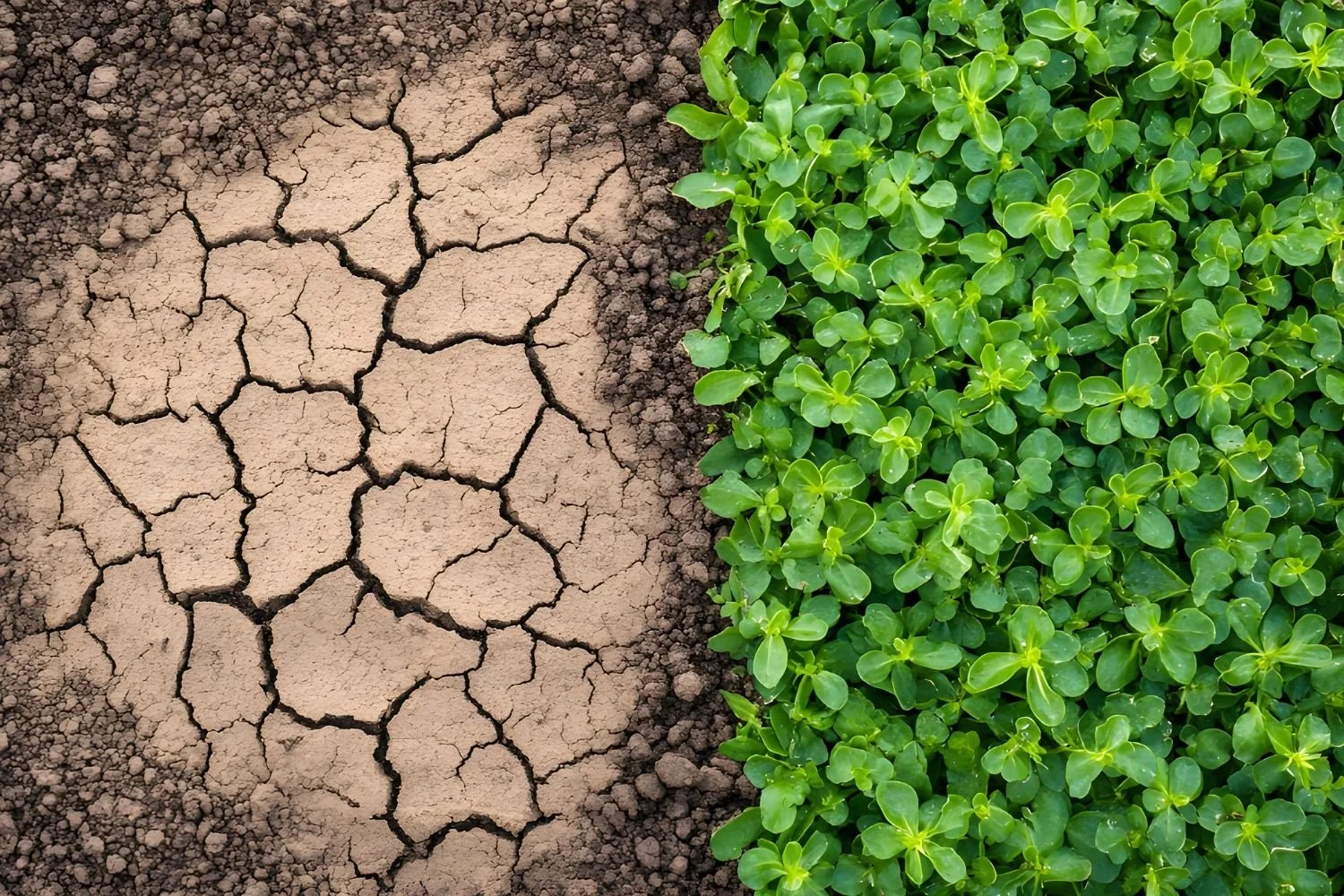
Many farming practices that increased production also depleted the health of the soil beneath our feet. Growing more through single-crop fields, deep plowing and heavy chemical use boosted short-term yields but slowly ruined the soil that those crops relied on. Over time, farmers began to recognise a simple truth: healthy crops do not come from seeds alone. They depend on healthy soil.
Today, we may be facing a remarkably similar challenge, but this time the soil is not beneath our feet. It is within us.
The Information Age has brought remarkable benefits. We have access to more knowledge than any generation in human history. We can communicate instantly with people across the globe. Artificial intelligence can perform tasks in seconds that once took hours.
Yet despite all this progress, many people feel exhausted. Burnout is rising. Attention spans seem to be shrinking. Anxiety has become commonplace. Many people struggle to properly switch off. We are more connected than ever to the world around us, yet many feel increasingly disconnected from themselves.
The issue may not be information itself. The issue may be what constant information is doing to us. Notifications, emails, messages, alerts, news feeds, endless scrolling and the expectation of constant availability all place demands on our attention. The human nervous system evolved in a very different environment. It was not designed for a world in which information arrives every waking moment of the day. What once came in waves now arrives as a flood.
And like any soil exposed to constant extraction without replenishment, our inner landscape begins to show signs of strain. The effects are often subtle at first. A low-grade irritability that is difficult to explain. A reduced ability to concentrate. A feeling of being "on" all the time. Less patience, less presence, less access to the creativity and joy that make life feel meaningful.
The irony is that many of the qualities we are seeking through technology and progress depend on the very conditions we may be eroding. Clarity tends to emerge from a settled mind. Creativity often appears when there is space rather than pressure. Genuine connection deepens when we are fully present, and our best decisions are usually made when we are not overwhelmed by noise, urgency and distraction.
Maybe the next step in wellbeing isn't getting more information. It's restoring the conditions that let us handle life well. Like regenerative farming heals the soil, we need practices that heal our inner life. And maybe we don’t need another productivity system but a return to basics humans have always used to recover: stillness, mindful breathing, movement, reflection, real connection, and time away from constant stimulation. These aren’t luxuries - they restore the inner ground where everything grows.
The Industrial Age taught us that healthy crops require healthy soil. The Information Age may be teaching us that healthy lives require healthy inner soil. And possibly one of the most important questions for our generation is not how much more information we can consume, but whether we can learn to care for the ground from which our thoughts, emotions, relationships and actions emerge.